
“The era of ‘static connectivity’ defined telecommunications for years, characterized by fixed bandwidth allocations and hardware-dependent systems that were slow to reconfigure.” Networks were built to move data from Point A to Point B, with intelligence living in massive, centralized cores. But as 2026 ushers in Autonomous Mobility and Massive IoT, the “Round-Trip Gap”—the time it takes for a signal to travel to a central cloud and back—has become the industry’s $500 billion bottleneck. In a world of 6G-ready applications, a 100ms delay isn’t just an annoyance; it’s a system failure.
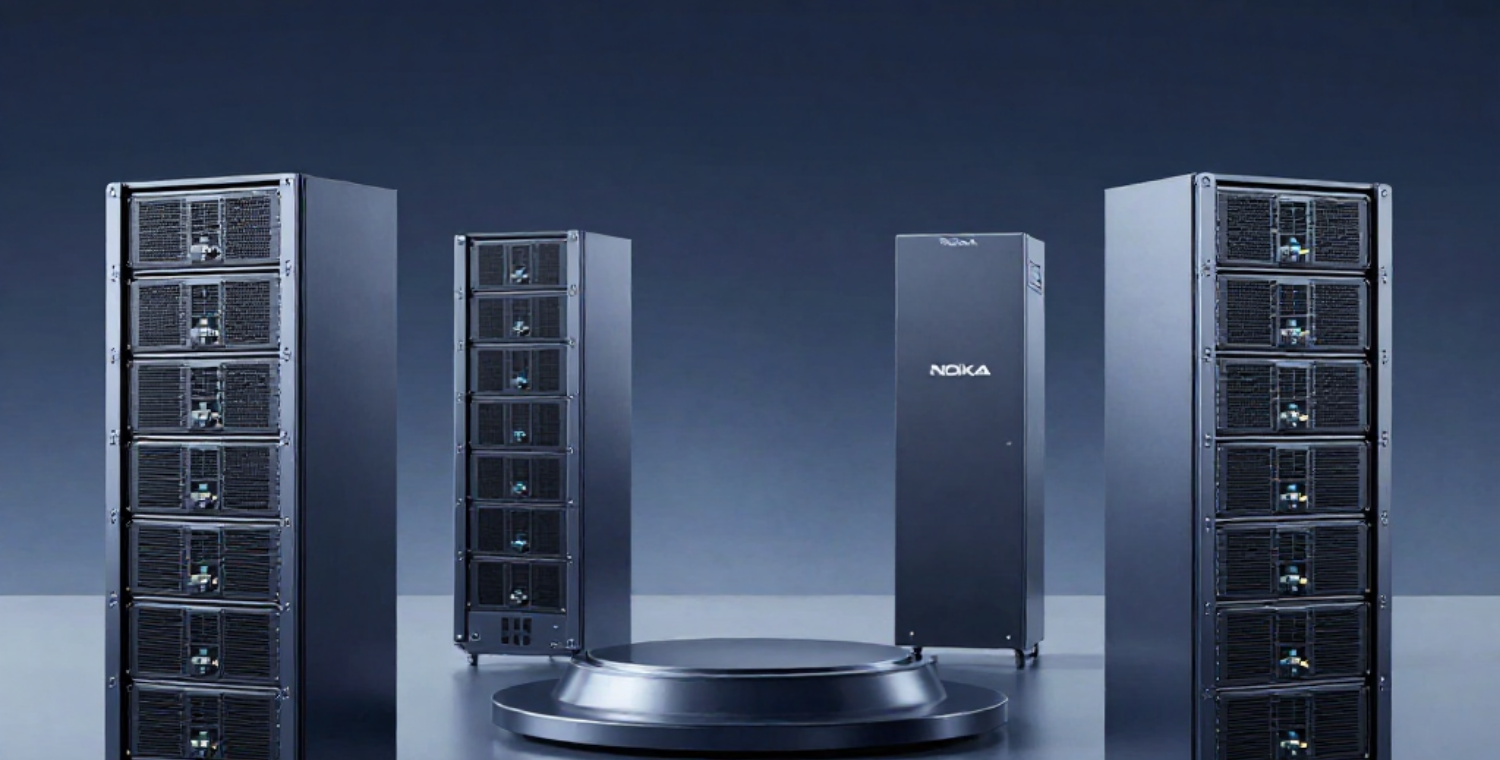
On March 11, 2026, Nokia and Akamai announced a massive infrastructure shift. By integrating NVIDIA Blackwell GPUs directly into the Radio Access Network (RAN), they are deploying the first truly AI-Native Telecommunications Fabric. This move shifts the “Brain” of the network away from distant data centers and places it directly into the cell towers and “Metro Edge” nodes, just microseconds away from the connected device.
The Challenge: The “Backhaul” Bottleneck in 5G-Advanced
As networks scale to support millions of devices per square kilometer, the sheer volume of data “backhauling” to the central cloud is choking bandwidth and spiking costs. Traditionally, the RAN was “dumb” hardware. The “Processing Gap” meant that complex tasks like real-time beamforming (shaping radio signals to follow a moving user) or instant fraud detection had to wait for a central command, leading to dropped calls and jittery video.
Nokia’s deployment solves this by turning the tower itself into a “Micro-Data Center.” This allows the network to “self-optimize” its radio waves and process AI workloads locally, reducing backhaul traffic by up to 40%.
The Solution: The Blackwell-Powered “AI-RAN” Stack
The centerpiece of this deployment is the NVIDIA Aerial framework running on Blackwell B200 GPUs. This allows Nokia to run both the communication software and generative AI applications on the same hardware at the edge.
Key Technology Deployment Pillars
| Pillar | Technology Integrated | Primary Function |
| Compute Layer | NVIDIA Blackwell B200 GPUs | Executes heavy AI inference for network optimization and 3rd-party apps. |
| Radio Layer | Nokia AirScale (AI-Native) | Uses machine learning to predict and eliminate signal interference. |
| Distributed Edge | Akamai Connected Cloud | Provides the global “Orchestration” to manage AI models across 4,100+ PoPs. |
| Security | AI-RAN Alliance Protocols | Protects the “Air Interface” against AI-driven signal jamming and spoofing. |
Phase 1: Deploying the “Predictive Beamforming” Strategy
The first phase focuses on Spectral Efficiency. Instead of broadcasting signals in a wide arc, the AI “predicts” where a user is moving.
- The Use Case: A high-speed train passenger in Tokyo streaming 8K VR content.
- The Action: The Blackwell-powered RAN predicts the train’s path and focuses a “pencil beam” of 5G signal exactly on the passenger’s window.
- The Result: Network capacity has increased by 3x, ensuring zero-lag connectivity even in ultra-dense urban environments.
Phase 2: Solving the “Energy Crisis” with Neural Networks
The second phase deploys Deep-Sleep AI Agents. Telecom towers are notorious energy consumers, often running at full power even when no one is using them.
- The Action: The AI “senses” traffic patterns in real-time. If an area is quiet (e.g., a business district at 3:00 AM), the Blackwell GPUs intelligently “power down” specific radio components without losing coverage.
- The Result: Operators are seeing a 15–20% reduction in total energy costs, a critical metric for ESG (Environmental, Social, and Governance) goals in 2026.
Operational Impact of AI-RAN Deployment (2026 Metrics)
| Metric | Legacy 5G (2024) | Blackwell-Powered AI-RAN |
| End-to-End Latency | 30ms – 60ms | < 5ms (Ultra-Reliable) |
| Network Capacity | Static / Limited | 3x Increase (AI-Optimized) |
| Energy Consumption | Constant High | 20% Reduction (AI-Managed) |
| Edge Compute Revenue | $0 (Connectivity Only) | New “Compute-as-a-Service” Revenue |
Phase 3: The “Sovereign Network” Advantage
In 2026, Telecom is considered “Critical National Infrastructure.” By using Sovereign AI-RAN pods, operators can ensure that all data processing—from emergency calls to banking transactions—stays within national borders. Because Nokia and Akamai have a physical presence in nearly every country, they allow governments to deploy high-power AI services while maintaining strict Data Sovereignty, ensuring that local data never touches a foreign cloud.
The Results: A New Paradigm for the Connected World
The shift from “Telco” to “Tech-Co” is redefining the value of the network.
- Deployment Success Summary:
- Monetizing the Edge: Operators are now renting out their “Tower Compute” to developers for AI gaming and autonomous drone delivery.
- Zero-Touch Ops: AI now fixes 80% of network faults automatically before a human technician is even alerted.
- Enhanced Security: Real-time AI scanning at the tower level has blocked 99% of “SIM-Swap” and SMS-phishing attacks.
Conclusion: The End of the “Dumb Pipe”
The deployment of NVIDIA Blackwell across the Nokia-Akamai ecosystem marks the end of the “Dumb Pipe” era. By bringing supercomputing to the very edge of the radio wave, these companies are ensuring that the network isn’t just a carrier of data—it’s a generator of intelligence. In the future of Telecommunications, the winner won’t just be the one with the most spectrum, but the one with the most intelligent and distributed edge.