
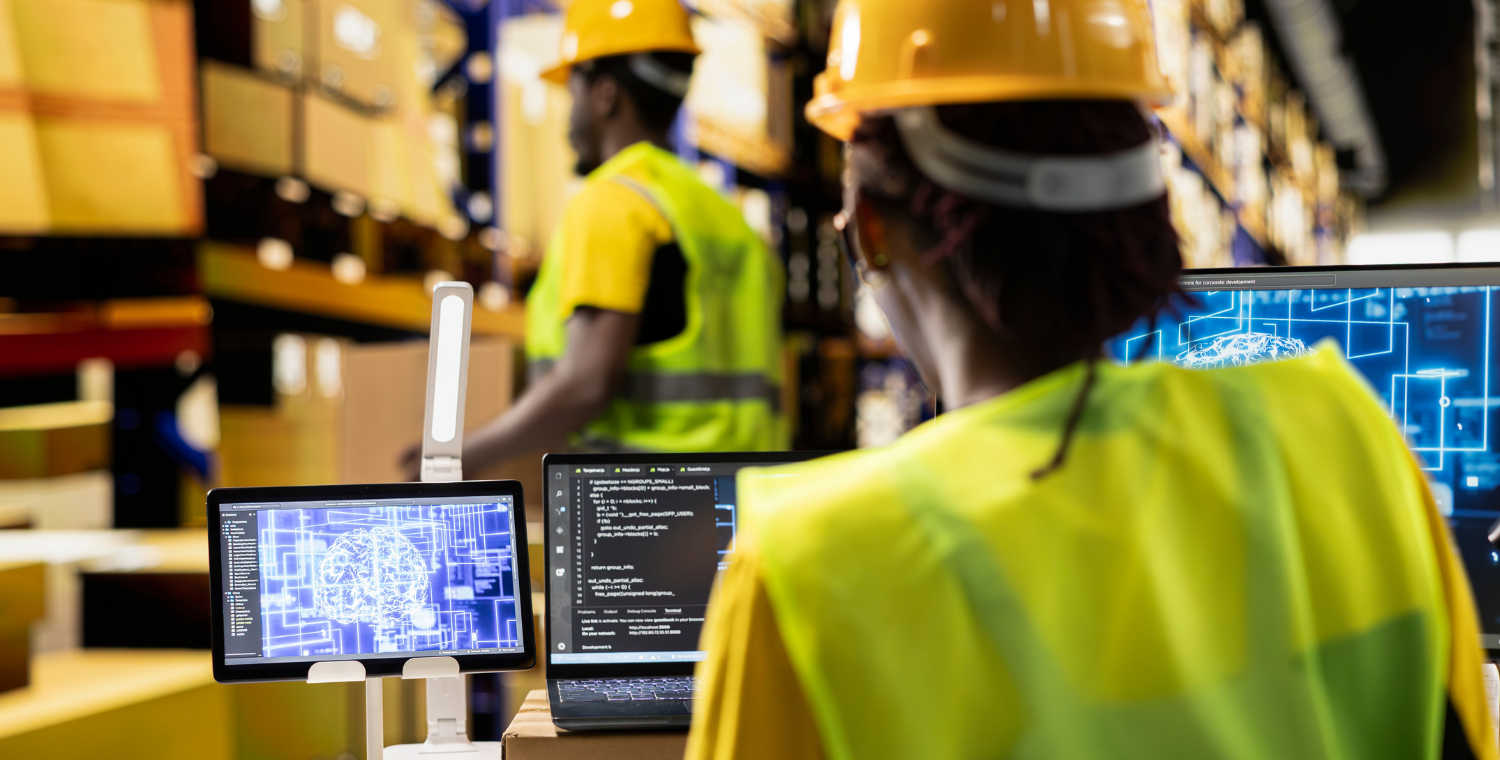
“The ‘Inventory Blindspot’ has been a decades-long plague on the retail industry’s operational efficiency.” Supply chains were reactive, relying on week-old data to make stocking decisions, which led to massive waste or frustrating out-of-stock messages for customers. As Retail moves into the era of Instant Commerce and Hyper-Personalized Logistics, the computational lag of traditional databases has become a barrier to global scale and thin margins.
On March 29, 2026, Walmart announced a massive infrastructure shift by launching the world’s largest Retail AI Factory. By integrating over 4,500 NVIDIA Blackwell GPUs into their global distribution hubs, Walmart is deploying a truly Integrated Omni-Channel Stack. This move shifts retail management away from manual “guess-and-check” ordering and places it into a high-velocity “Digital-Twin-in-the-Loop” system where the store and the warehouse sync in real-time.
The Challenge: The “Last-Mile” Bottleneck
In retail, a missing item on a shelf is a lost customer. Traditionally, predicting demand for 100,000+ products across 10,000 stores was a manual nightmare. The “Forecasting Gap” meant that billions of dollars in capital were tied up in “safety stock” that sat in backrooms while popular items went out of stock due to sudden viral social media trends.
Walmart’s deployment solves this by providing the massive “horsepower” needed to run Predictive Agentic Workflows. This allows the AI to “simulate” a million different shopping scenarios every hour—adjusting logistics plans before a surge even happens.
The Solution: The Blackwell-Powered “Commerce” Stack
The centerpiece of this deployment is the NVIDIA Omniverse platform integrated with Walmart’s Luminate data engine, running on Blackwell architecture.
Key Technology Deployment Pillars
| Pillar | Technology Integrated | Primary Function |
| Compute Layer | NVIDIA Blackwell B200 GPUs | Accelerates global supply chain path-optimization by 60x. |
| Model Factory | NVIDIA NeMo & Riva | Powers “Shopping Agents” that can understand and predict local buying habits. |
| Digital Twin | NVIDIA Omniverse (Retail) | Creates a “Live Mirror” of every store and warehouse to optimize layout. |
| Edge Layer | NVIDIA Jetson (Robotics) | Powers autonomous “Shelf-Scanning” robots that track inventory in real-time. |
Phase 1: Deploying the “Trend-to-Shelf” Strategy
The first phase of the rollout focuses on Demand Autonomy. By connecting social media sentiment and weather patterns directly to procurement, Walmart has created a “Trend-Sense” loop.
- The Use Case: A specific health drink goes viral on TikTok in the Midwest.
- The Action: The Blackwell-powered AI senses the spike in local search and mentions. It automatically reroutes three delivery trucks from a neighboring region to the affected stores before the shelves go empty.
- The Result: “Out-of-Stock” incidents for trending items have dropped by 48% since the March rollout.
Phase 2: Solving the “Warehouse Friction” Bottleneck
Beyond the storefront, Walmart is deploying AI to manage the world’s most complex robotic warehouses.
- The Action: Using Blackwell’s high throughput, the system manages 500+ autonomous robots in a single facility, calculating their paths every millisecond to avoid collisions and optimize picking speed.
- The Result: “Click-to-Ship” time for online orders has dropped from 2 hours to under 12 minutes.
Operational Impact of Walmart AI Factory (2026 Metrics)
| Metric | Traditional Retail (2023) | Walmart AI Factory (2026) |
| Inventory Turnover | ~8-10x Yearly | 18x+ Yearly (AI-Optimized) |
| Inference Latency | Minutes (Batch Processing) | < 20ms (Real-Time Flows) |
| Route Optimization | 12+ Hours (Global) | < 4 Minutes (Full Network) |
| Wasted Inventory | ~4-6% (Perishable/Loss) | Targeted 75% Reduction |
Phase 3: The “Sovereign Consumer AI” Advantage
Customer shopping habits are deeply personal data. By using a Sovereign AI model, Walmart ensures that individual customer profiles never leave the local secure cloud of the store’s region. The AI learns “patterns” of what people like, but it never stores “who” they are in a way that violates privacy. This allows Walmart to offer Hyper-Personalized Coupons and “Smart Shopping Lists” that actually work, while maintaining the highest level of consumer trust and GDPR/CCPA compliance.
The Results: A New Paradigm for Global Trade
Walmart’s shift to an AI-Accelerated Retail Organization is already showing results.
- Deployment Success Summary:
- Waste Reduction: AI now predicts exactly how many bananas or gallons of milk a store needs, reducing fresh-food waste by 22%.
- Employee Efficiency: Store associates spend 30% less time on “stocking tasks” and more time helping customers, as AI-guided robots handle the heavy lifting.
- Zero-Inventory Stores: In select urban pilots, “Micro-Fulfillment” AI allows stores to carry 5x the variety in 1/2 the space.
Conclusion: The End of the “Out-of-Stock” Era
The deployment of the NVIDIA Blackwell AI Factory marks the end of the “Guesswork” era in commerce. By bringing the world’s most advanced compute power to the retail shelf, Walmart is ensuring that the products people want aren’t just nearby—they are waiting for them. In the race for the customer’s wallet, the winner won’t just be the one with the most stores, but the one who can predict human desire at the speed of light.