
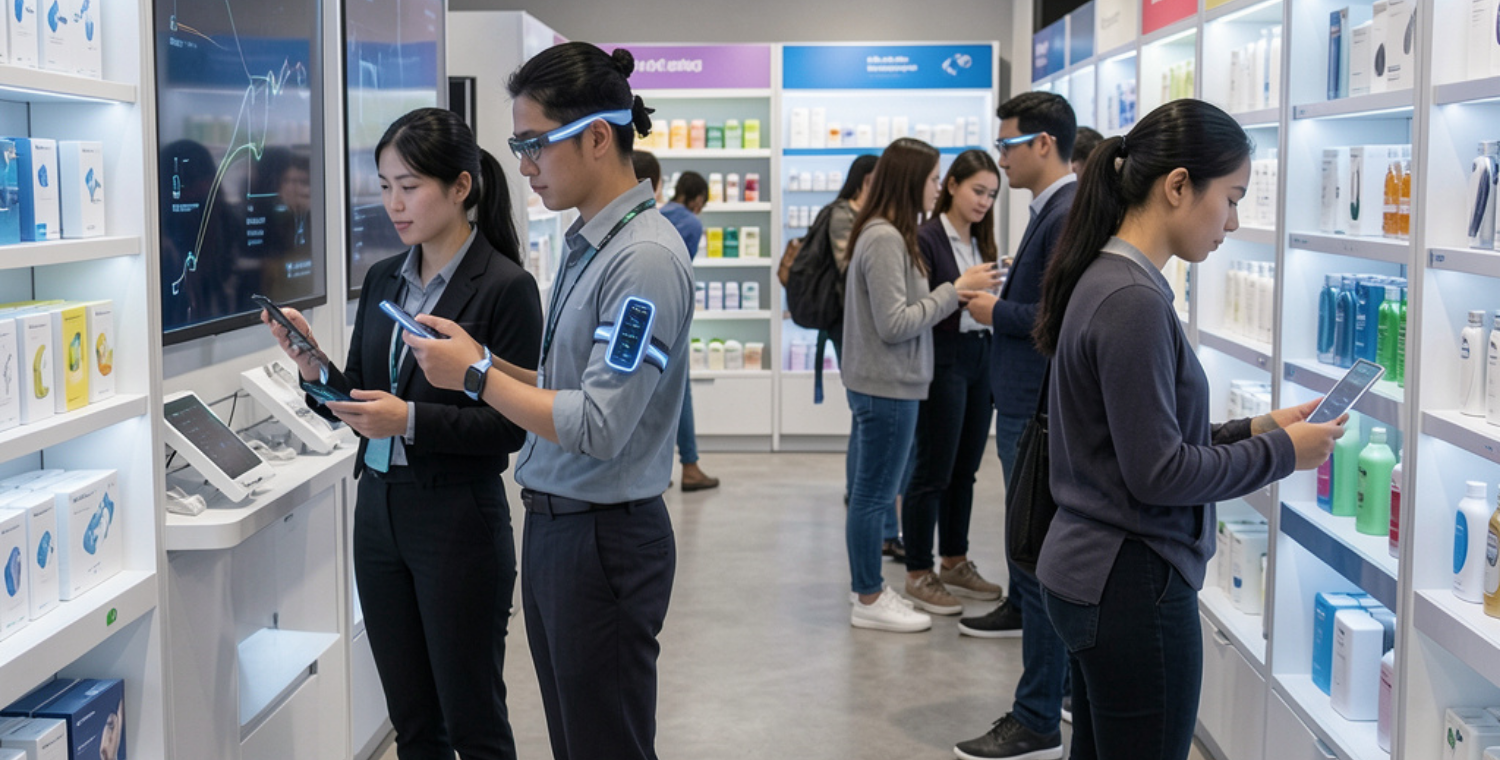
For years, retail staff struggled with “Information Overload.” Store leaders spent hours on manual tasks like shift scheduling and inventory tracking, while guests often found it hard to get personalized help for complex needs (like “What outfit should I wear for a beach wedding?”). This “Productivity Gap” meant that human creativity was being buried under administrative paperwork.
On February 4, 2026, Target confirmed its shift from “Using AI” to “Running on AI.” By deploying OpenAI-powered agentic systems to 18,000 team members, Target has automated the “boring” parts of retail, allowing its staff to focus entirely on the “Guest Experience.”
The Challenge: The “Keyword Search” Bottleneck
Traditional e-commerce was built on keywords. If a guest didn’t know the exact name of a product, they couldn’t find it. The “Discovery Gap” meant that 40% of complex searches resulted in no purchase because the AI didn’t understand the “context” of the user’s life.
Target’s deployment solves this by moving to Conversational Commerce, where the AI understands style, lifestyle, and history to give instant, relevant advice.
The Solution: The “Trend Brain” & Agentic Stack
The centerpiece is a unified AI ecosystem that connects internal design trends with real-time store operations.
Key Technology Deployment Pillars
| Pillar | Technology Integrated | Primary Function |
| Intelligence | OpenAI GPT-4o / Agentic Models | Powers conversational search and autonomous staff scheduling. |
| Merchandising | Target “Trend Brain” | Scans social media and runways to help designers move from concept to product. |
| Operational Link | Staff-Facing AI Chatbots | Allows store leaders to rebuild complex shift plans in minutes. |
| Customer Layer | Context-Aware Search | Understands detailed natural language queries (e.g., “Outfits for a 90s party”). |
Phase 1: Deploying the “Empowered Team Member” Strategy
The first phase focused on giving every store leader an “AI Assistant.”
- The Use Case: Managing sudden staff shortages during the holiday rush.
- The Action: A store leader in Long Island used the AI to restructure an entire week’s shift schedule in minutes after multiple sick calls.
- The Result: Administrative task time was slashed by 80%, allowing leaders to spend more time on the sales floor.
Phase 2: Solving the “Inspiration-to-Purchase” Problem
Beyond operations, Target is using its “Trend Brain” to win on style.
- The Use Case: Helping guests discover products through lifestyle-based conversations.
- The Action: The AI “Personal Stylist” uses Target’s internal design data to suggest complete “looks” rather than just individual items.
- The Result: Regular usage by 18,000 team members has led to more consistent guest advice and a noticeable lift in “Basket Size.”
Operational Impact of Target AI Deployment (2026 Metrics)
| Metric | Traditional Retail (2024) | Target Agentic AI (2026) |
| Shift Scheduling Time | 2–3 Hours | < 5 Minutes (AI-Assisted) |
| Search Success Rate | Keyword Dependent | High (Context-Driven) |
| Merchandising Cycle | Months | Weeks (Trend-Brain Accelerated) |
| Staff Engagement | High Burnout (Admin) | High (Guest-Focus Enabled) |
Phase 3: The “Running on AI” Advantage
Target’s strategic moat is “Amplification, Not Replacement.” By giving AI to its 18,000 employees, Target has created a “Human-Centric Intelligence” model. The AI handles the data and the logic, while the humans handle the design and the empathy. This ensures that Target remains a “Design Leader” in a world where everything else is becoming a commodity.
The Results: A New Paradigm for Modern Retail
Target’s shift to an agentic organization is proving that AI’s biggest value is in “Time-Giving.”
- Deployment Success Summary:
- Rapid Innovation: The “Trend Brain” has cut the time from “Identifying a Trend” to “Product Decision” by 50%.
- Guest Loyalty: Conversational search has reduced “Search Abandonment” by 25%.
- Operational Agility: 60% of team members now use AI tools weekly to solve floor-level problems.
Conclusion: The End of the “Admin-Heavy” Store
The deployment of Target’s Agentic Stack marks the end of the “Manager-as-Secretary” era. By bringing reasoning AI to the store floor, Target is ensuring that its people are its greatest competitive advantage. In the race for the future of shopping, the winner isn’t just the one with the best website, but the one who can empower their people at the speed of the guest.