
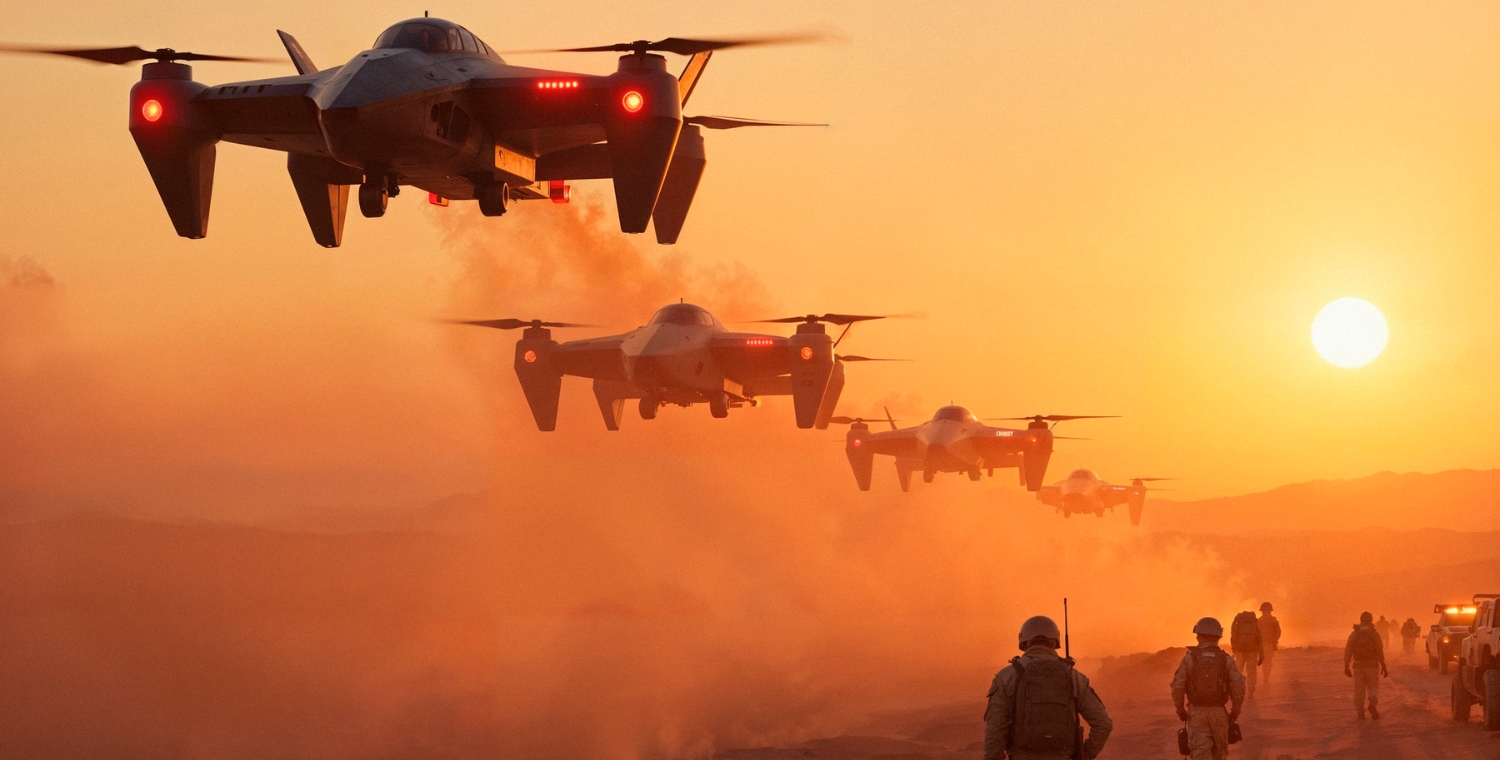
The landscape of global defense is shifting from the ground to the sky. On March 18, 2026, a major market report released via Newswire Canada confirmed that the military drone sector is entering a period of “explosive growth.” With projections extending through 2030, the data suggests that autonomous warfare is no longer a future concept—it is the current reality of national security.
As nations race to modernize their arsenals, the “AI Factory” for defense is producing more than just hardware; it is producing a new era of strategic superiority.
The Growth Engine
Why Drones are Dominating
The primary driver behind this market surge is the cost-to-capability ratio. A single high-end drone can perform the surveillance, targeting, and strike functions that previously required a fleet of manned aircraft and hundreds of personnel. Furthermore, the risk to human life is significantly reduced when the “pilot” is operating from a secure location thousands of miles away.
Consequently, both developed and emerging economies are diverting billions of dollars from traditional armored vehicles toward Unmanned Aerial Systems (UAS). The report predicts that by 2030, the global market will reach unprecedented valuation, driven by advancements in:
Stealth Technology: Making drones nearly invisible to conventional radar.
Extended Endurance: Allowing for 24/7 “eyes in the sky” without the need for refueling.
Payload Versatility: From precision-guided missiles to electronic jamming equipment.
The Rise of the “Swarm”
Intelligence at the Edge
The most humanized, yet chilling, development in 2026 is the transition to Swarm Intelligence. Instead of a single drone acting alone, military forces are deploying “swarms” of hundreds of smaller, interconnected units.
These swarms use Agentic AI to communicate with one another in real-time. If one drone is shot down, the others instantly adjust their formation to complete the mission. This level of resilience makes them nearly impossible to stop with traditional anti-aircraft systems. Similarly, this technology allows for “Saturation Attacks,” where a swarm overwhelms a target’s defenses simply by having too many targets to track at once.
The Human Element: Ethical and Strategic Rifts
The “Decision-Maker” Debate
As autonomous warfare takes flight, the world is facing a deep ethical crossroads. When a drone uses AI to identify a target, who is responsible for the final “pull of the trigger”?
The Newswire report highlights a growing demand for Human-in-the-Loop systems. While the drones can fly and scan autonomously, military leaders are increasingly insisting on a “human handshake” for any lethal action. Consequently, this has created a new class of “Digital Soldiers”—operators who must manage high-stress combat environments from a computer screen. Furthermore, the psychological toll on these operators is becoming a major area of study for defense departments worldwide.
Conclusion: A World Without Borders?
The explosive growth of the military drone market through 2030 signals the end of traditional “trench and territory” warfare. In this new era, the side that controls the algorithms and the airspace holds the ultimate advantage.
As we look toward 2030, the challenge for the global community will be to create international guardrails for autonomous weapons. While drones offer a safer way for soldiers to defend their countries, they also pose the greatest challenge to our existing laws of war. The sky may be the new frontline, but we must ensure it doesn’t become a lawless frontier.