
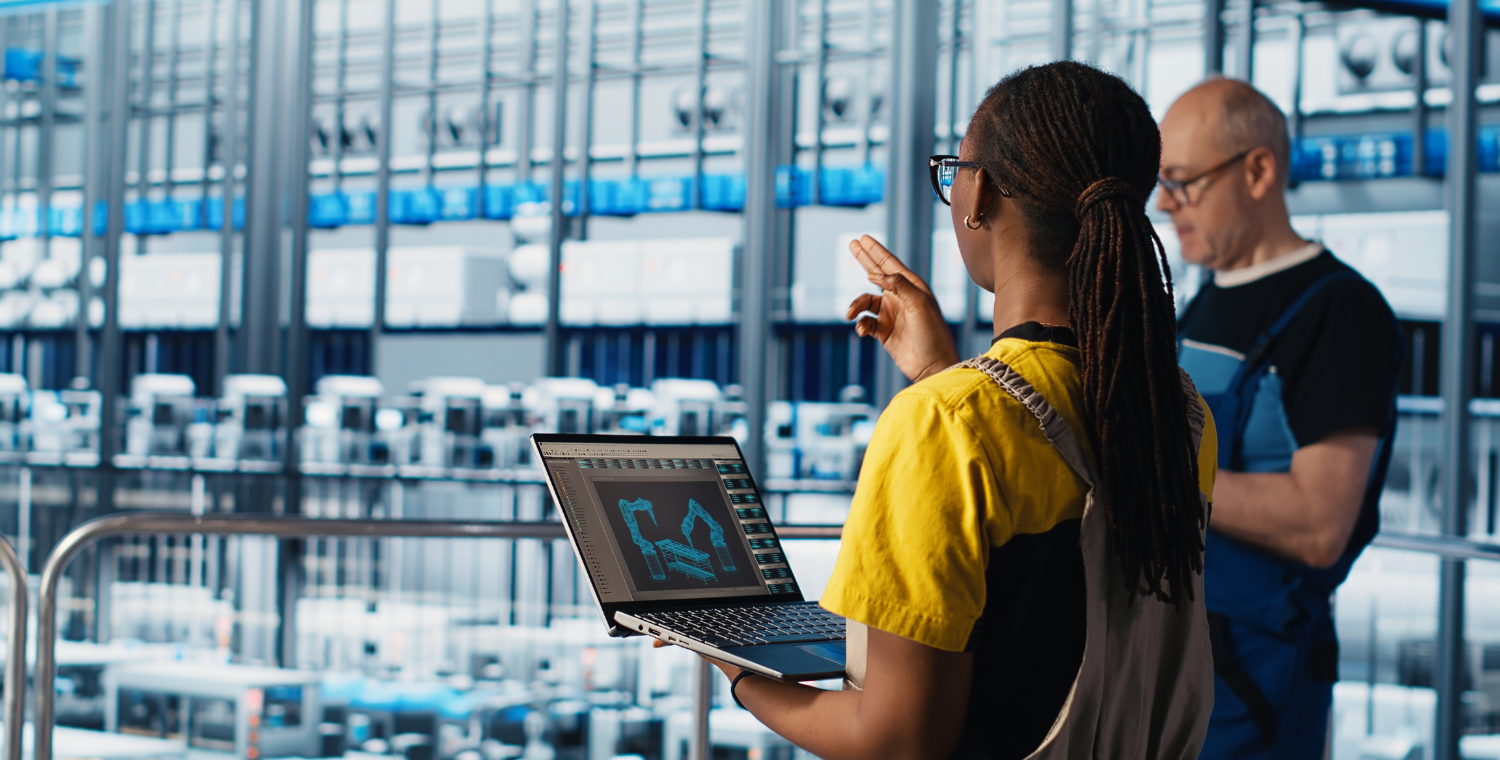
For decades, factories were defined by hardware—machines, assembly lines, and physical infrastructure that changed slowly over time. Once a production line was installed, it often remained unchanged for years. But a new idea is beginning to reshape manufacturing: the Software-Defined Factory (SDF).
This concept suggests a major shift in how factories operate. Instead of being rigid systems built around hardware, future factories could be controlled, optimized, and continuously updated through software. It’s a transformation that may redefine how industries produce everything—from cars to electronics.
And if the idea succeeds, the factory of the future may behave less like a mechanical plant and more like a software platform.
Moving From Hardware to Software
Traditional manufacturing has always been hardware-centric. Machines were designed for specific tasks, and altering production meant physically reconfiguring equipment or installing new systems. This made manufacturing powerful but also slow to adapt.
The software-defined factory flips this model.
In an SDF environment, a layer of software oversees manufacturing processes, coordinating machines, data systems, and workflows in real time. Instead of relying solely on fixed hardware logic, factories can adjust operations through digital controls and analytics.
Think of it like updating an app on your phone. In the past, improving a factory might require replacing equipment. In a software-defined environment, improvements could come through software updates, data insights, and automation tools.
This flexibility is becoming increasingly important in a world where consumer demands change quickly and product life cycles are shrinking.
The Rise of Smart and Connected Manufacturing
The software-defined factory is closely tied to the broader transformation known as Industry 4.0, which combines technologies such as artificial intelligence, IoT sensors, cloud computing, and advanced analytics.
In this new manufacturing model, machines generate enormous amounts of data. Sensors monitor performance, predictive algorithms detect problems early, and digital systems coordinate production across multiple facilities.
When software becomes the central control layer, manufacturers can integrate all these technologies into a single ecosystem.
The result is a factory that is:
• Scalable – production can expand or shrink based on demand
• Flexible – systems can adapt to new products quickly
• Data-driven – decisions are based on real-time insights rather than manual observation
In many ways, it transforms manufacturing from a mechanical process into a digital one.
Why This Shift Is Happening Now
Several forces are pushing manufacturers toward software-defined factories.
First, market volatility has increased dramatically. Companies must respond faster to changing customer expectations and supply chain disruptions. Traditional manufacturing systems struggle to adapt at that speed.
Second, the complexity of modern products is rising. Many products today—from electric vehicles to smart devices—contain large amounts of embedded software. Managing these products often requires flexible production systems that can evolve throughout the product lifecycle.
Third, there is a growing need for operational efficiency and sustainability. Software-based control systems can analyze energy consumption, optimize workflows, and reduce waste across manufacturing processes.
In short, software gives factories the ability to think, adapt, and improve continuously.
Breaking the Silos Between IT and the Factory Floor
One of the most important aspects of the software-defined factory is the integration of IT (information technology) with OT (operational technology).
Historically, these two worlds operated separately. IT systems handled data, business operations, and enterprise software, while OT systems controlled machines and industrial processes.
The new manufacturing paradigm aims to merge these domains so that factory operations, analytics platforms, and enterprise systems work seamlessly together. This integration enables real-time data flow between machines, analytics tools, and decision-making systems.
Once this connection is established, factories can become far more responsive and intelligent.
The Promise—and the Reality
The vision of the software-defined factory is compelling. It promises greater agility, better productivity, and faster innovation.
But the transition will not be easy.
Many factories still rely on decades-old infrastructure that was never designed for digital integration. Upgrading these systems requires significant investment, technical expertise, and organizational change.
There is also the human dimension. Workers and engineers must learn new digital skills to operate and maintain increasingly software-driven environments.
In other words, building a software-defined factory is not just a technology upgrade—it’s a transformation of industrial culture.
A Glimpse of the Future
Despite the challenges, the momentum behind software-defined manufacturing continues to grow.
Factories are evolving from static production environments into dynamic digital systems where machines, software, and humans collaborate. In such environments, production lines could be reconfigured overnight, supply chains optimized automatically, and new products launched faster than ever before.
The idea may still sound futuristic, but the foundation is already being built.
And if the shift continues, the factories of tomorrow may not just manufacture products.
They may operate like living software systems—constantly learning, adapting, and improving.